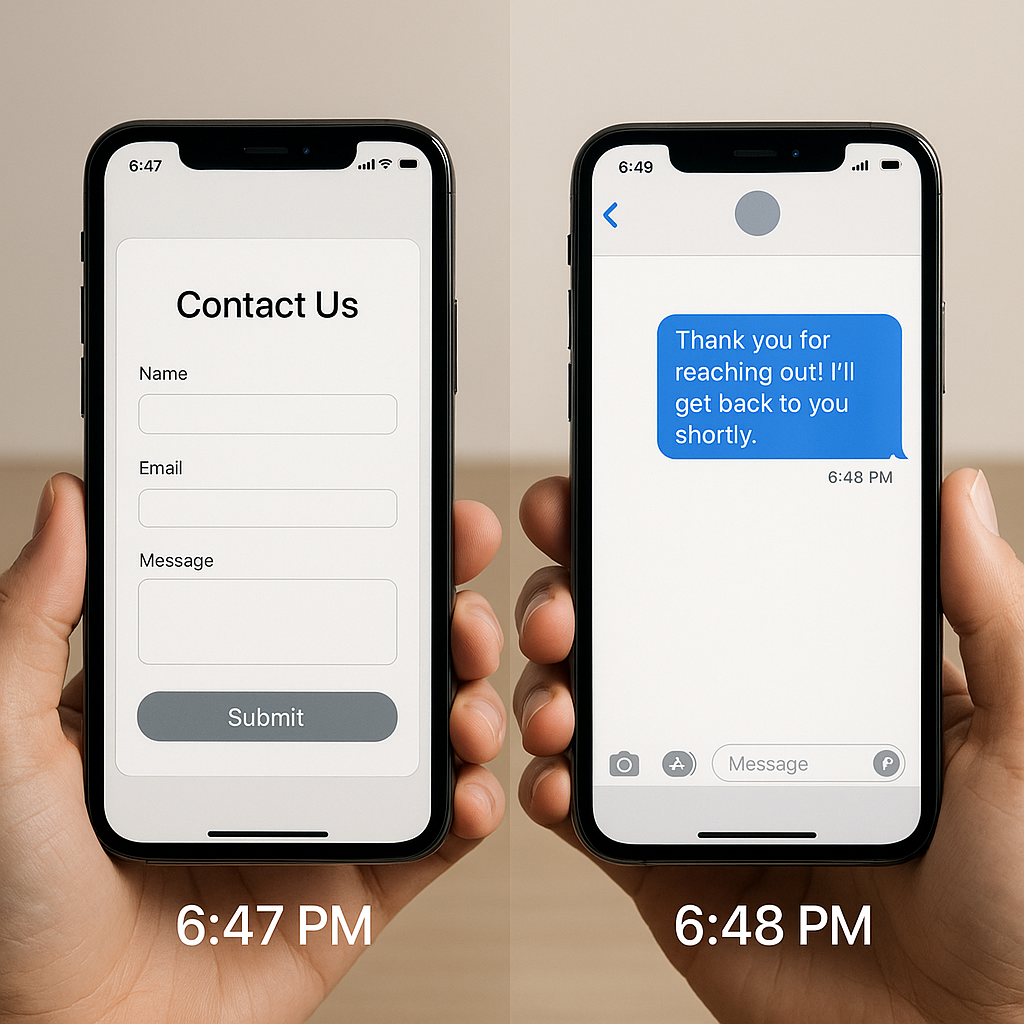
Slow lead response costs local service businesses thousands in monthly revenue because 78% of buyers choose whoever responds first, not the company with the best service or lowest price. While you're checking voicemail twice a day, competitors who acknowledge leads instantly via text are booking your potential clients.
78% of buyers choose whoever responds first, not best.
You probably assume that calling back within a few hours puts you ahead of most competitors. Follow up by end of business day and you're professional. Next morning at the latest.
A family law firm with strong referrals started using Google Ads to expand beyond word-of-mouth. Their intake coordinator checked the contact form twice daily — once at 10 AM and once at 3 PM. Most leads came in during evening hours when potential clients researched divorce attorneys after work. By the time the firm responded the next morning, 70% of inquirers had already scheduled consultations with competitors who acknowledged their submissions immediately via text, even if the full consultation was scheduled for later.
The pattern is clear: buyers contact multiple providers within the same hour. First responder gets the conversation. Everyone else gets voicemail.
A veterinary clinic generating 15 leads per month loses 8 to 10 potential clients to faster competitors. That represents $1,200 to $1,800 in lost monthly revenue from routine visits and procedures alone.
The math is brutal because the cost compounds. Those lost clients don't just skip one appointment. They build relationships with your competitors. Annual wellness visits, dental cleanings, emergency calls, prescription refills. A single client represents $800 to $1,500 in lifetime value.
But this isn't happening because you don't care about clients. You built your reputation on relationships and quality service. The gap exists because buyer behavior shifted faster than follow-up systems. People expect instant acknowledgment from businesses the same way they expect instant responses from friends.
According to the Lead Response Management Study, 78% of B2B buyers purchase from the company that responds first — not the best or the cheapest, but the first. Speed has become the primary selection criteria for initial contact.
Automatic SMS acknowledgment changes this calculation completely. When someone submits a contact form, they receive a text within 30 seconds: "Got your request for lawn care estimate. Sarah will call you tomorrow at 10 AM to schedule your consultation. Reply STOP to opt out."
The prospect feels heard. They stop researching competitors. You own the conversation before it starts.
What I see work differently is businesses that separate acknowledgment from scheduling. The text buys time and stops prospect leakage. The human conversation happens when it makes sense for your operations. But the instant response prevents the lead from contacting three more companies while they wait for your callback.
First response creates a psychological commitment from the buyer. They submitted one form. Got one immediate reply. The search feels complete even though the actual service call hasn't happened yet.
Every hour of delay cuts your conversion probability in half. Day two reduces it to single digits. By then, prospects have spoken to faster competitors and started forming relationships.
The businesses that consistently book more consultations have automated the acknowledgment step. Leads get instant confirmation via text. Qualified prospects get human follow-up within the same business day. The owner's time stays focused on delivery, not lead management.
How many qualified prospects contacted you last week but hired someone else because they responded faster than you did?