Local service businesses paying for Google Ads lose leads not because the ads fail, but because no one responds when leads arrive after hours. Automated SMS response is the fastest intervention to stop that loss.
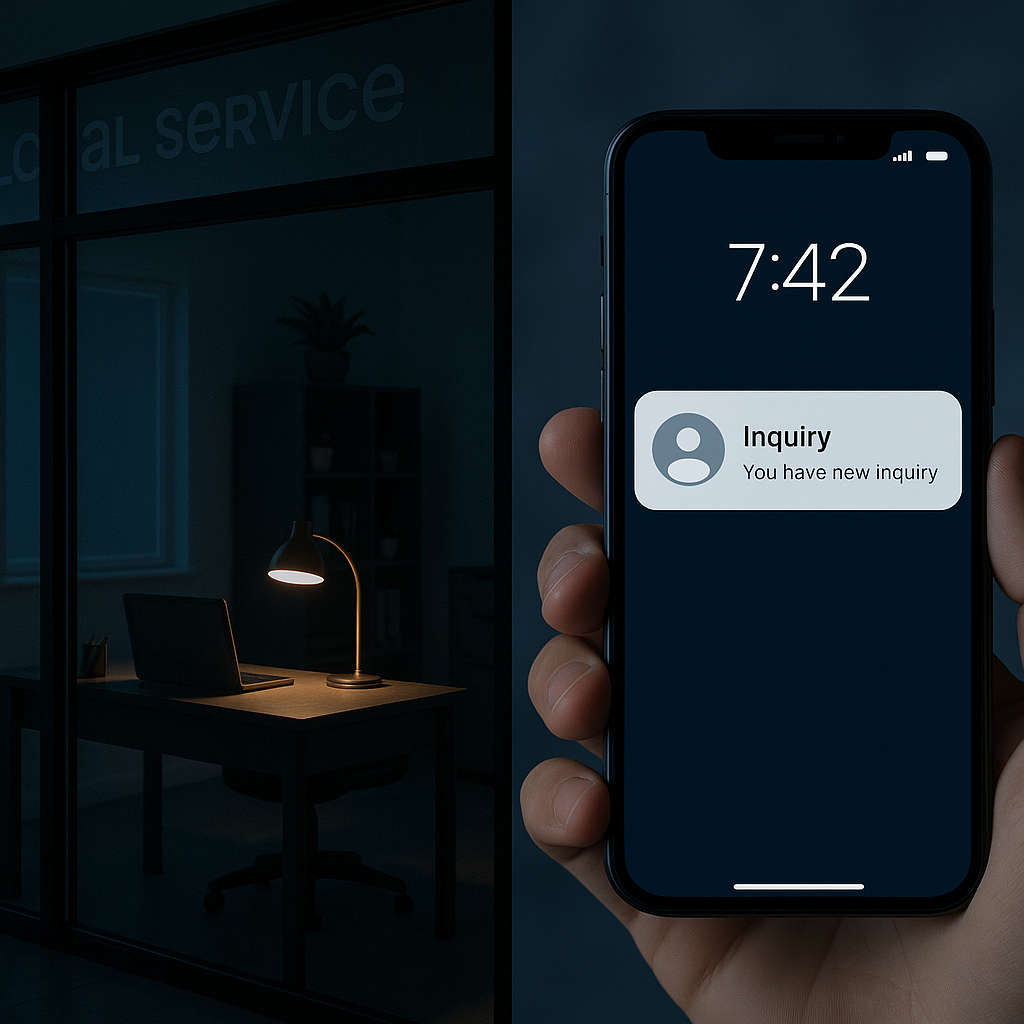
Your ad worked. The lead left before you answered.
You probably assume that a lead who fills out your form at 7 PM will still be available when your front desk arrives at 9 AM. That assumption is costing you money that your ad budget will never recover.
A physical therapy clinic in a mid-sized metro running Google Local Services Ads at $2,200 per month generates around 40 inbound leads monthly. Front desk staff leaves at 6 PM. Clinic data shows that 27 of those 40 leads submit intake forms or call between 6 PM and 9 PM on weekdays, or across Saturday and Sunday. Every one of those contacts goes to voicemail or sits in an unmonitored web form queue until Monday morning. Within three months, the clinic's cost-per-acquisition rose 38%. Not because the ads stopped working. Because the leads arrived and evaporated before anyone picked them up. Three competing clinics in the same zip code implemented automated SMS response. They are getting the conversation first.
The voicemail you think of as a safety net, the lead treats as a dead end. They are not sitting at home waiting. They are already on the next search result.
A local service business spending $1,500 to $3,000 per month on paid ads and generating 30 to 50 leads monthly can expect 20 to 33 of those leads to submit after hours. The conversion rate on leads that wait until the next morning is 67% lower than leads contacted the same night. That translates to 8 to 14 qualified leads lost every single month, and at an average client value of $300 to $800, that is $2,400 to $11,200 in monthly revenue leaving untouched.
You built a business on showing up for clients. The fact that this gap exists is not a sign that you stopped paying attention. The system was built around business hours, and nobody told you the leads stopped respecting that schedule. The ads run around the clock. The response window does not.
HubSpot data shows that after-hours leads who receive a same-night response have an 85% contact rate. Leads who wait until the next morning: 35%. That is not a modest difference. That is a binary split between a client and a lost lead, and it is determined entirely by response time, not by your reputation, your reviews, or how much you spent to get the click.
The businesses gaining ground on Local Services Ads right now are not outspending their competitors. They are out-responding them at 8 PM on a Tuesday. The gap is not in the ad. It is in the moment after the ad works.
What I see consistently is that the fix does not require hiring anyone or monitoring a phone all night. An automated SMS response, triggered the moment a lead submits a form or calls after hours, responds within seconds. It keeps the conversation open and holds the lead's attention until a human can follow up in the morning. The businesses that resolve the after-hours gap this way often find their cost-per-acquisition drops within the first billing cycle, because the same ad spend is now capturing leads that were already paid for but never converted.
This is not a staffing problem or an ad strategy problem. It is a response architecture problem. And it has a known solution.
Every month that passes without an after-hours response system is another month of ad spend split between leads you captured and leads you paid to send to a competitor. The math does not get friendlier over time.
When you sort your last 30 days of leads by submission time, how many arrived after 5 PM — and what would that number look like multiplied by your average client value?